
Speciality Products
Detector Tube
Ultra-thin-walled specialist tubes for particle physics detection systems, including drift tubes and straw tubes. Manufactured to precise mechanical tolerances with wall thicknesses between 8 and 12 microns, with gold and aluminium coating options.
Lamina manufactures specialist thin-walled detector tubes for particle physics applications, including drift tubes and proportional counters such as straw tubes. These tubes are used primarily for tracking charged particles while minimising interactions that could distort a particle’s path or energy.
Lamina can manufacture thin-walled tubes with specific mechanical properties to suit your requirements. These specialist tubes typically have walls between 8 and 12 microns, and are usually coated with gold, aluminium, or both.
Why Thin Walls Matter
Minimise Material Budget
Thin walls reduce the amount of material a particle must pass through before or after the active detection volume. This prevents unwanted scattering and energy loss, preserving the particle’s original trajectory and energy information.
Allow Low-Energy Particle Entry
Thin walls enable lower-energy particles, particularly beta particles (electrons), to enter the active gas volume for detection, which would otherwise be stopped by thicker materials.
Facilitate Transition Radiation Detection
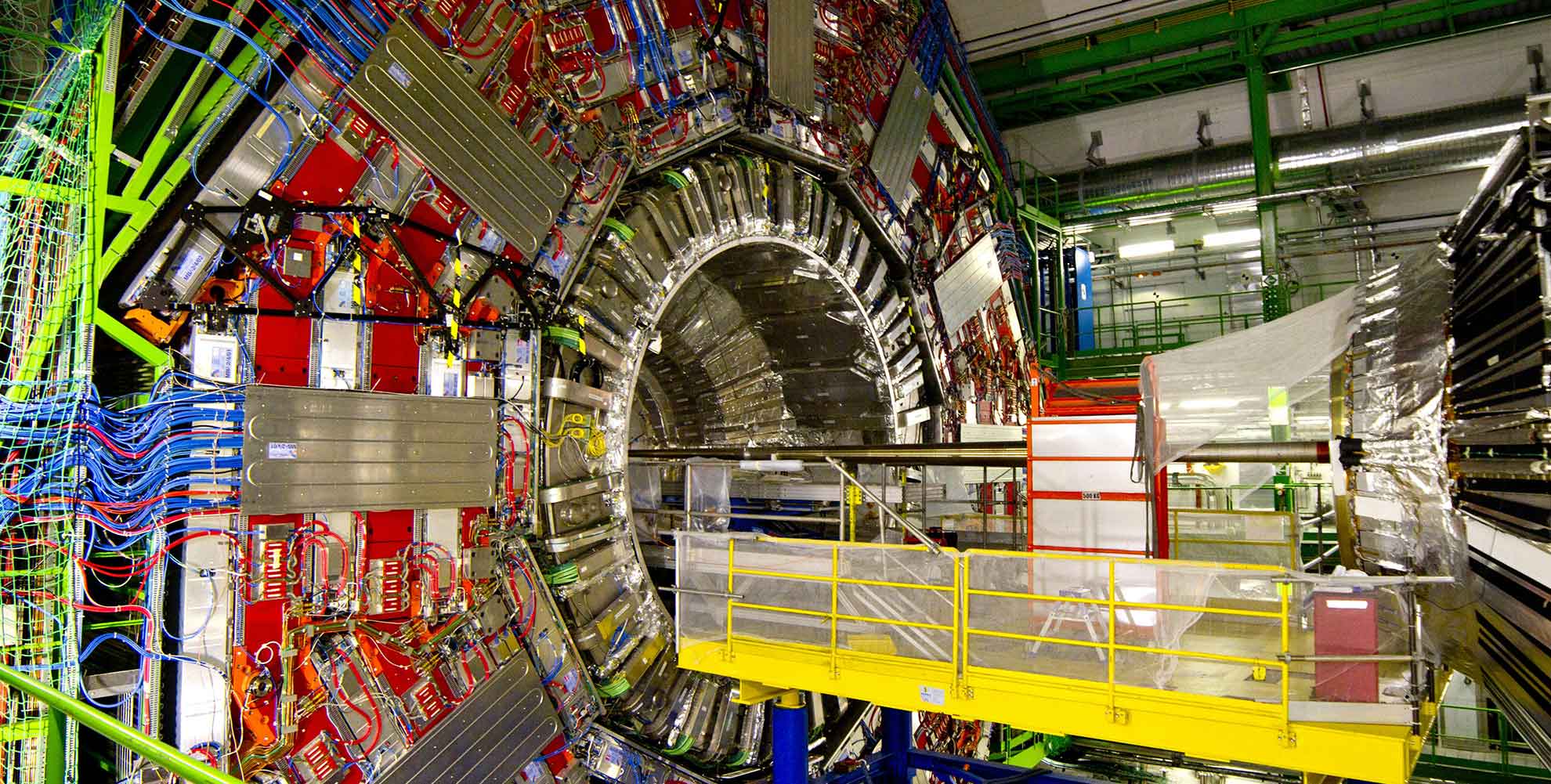
In certain detectors, such as the Transition Radiation Tracker (TRT) at CERN, thin-walled straw tubes are used to detect transition radiation X-rays produced as high-energy electrons pass through thin, layered materials.
Ready to work with Lamina?
Whether you need standard product from stock or a precision bespoke solution, our team is ready to help. Get in touch to discuss your requirements.
Get in touchDetector Types
Proportional Counters and Drift Tubes (Straw Tubes)
Commonly used in large-scale tracking systems in major experiments including the ATLAS detector at CERN. These consist of very thin-walled tubes — often just 4mm in diameter — with a central anode wire.
Multi-Wire Proportional Chambers (MWPCs)
A larger chamber format based on the same principle of thin wires and gas volume, allowing for detailed three-dimensional tracking information.
How They Work
These detectors operate through the ionisation effect. When a charged particle passes through the low-pressure gas inside the tube, it ionises gas atoms, producing free electrons and ions. A high voltage between the central wire and the tube wall causes the electrons to drift toward the wire, creating an electrical pulse that is amplified and recorded.
By using arrays of thin-walled tubes and timing the arrival of the signal at the wire (the drift tube principle), physicists can reconstruct the precise path of the particle.
Notable Projects
Lamina has supplied detector tubes to major high-energy physics experiments, including components for the LHCb detector at CERN. A copy of the LHCb Industry Award is available for download.
Other Products
A focused range of precision-engineered insulation products, each developed to meet the exacting standards of the industries we serve.

Pipeline & Flange Protection

Precision Extrusion Technology

Fluoropolymer Extrusion